

Riding the Nagaragawa Railway through Gifu’s scenic river valley
In the previous instalment, I visited the Nagaragawa Cormorant Fishing, a tradition with a history spanning more than 1,300 years, and experienced the culture that has developed through the long relationship between the river and the people who live alongside it.
For this journey, I decided to follow the course of the Nagara River. Starting with the cormorant fishing in Gifu City, I travelled upstream on the Nagaragawa Railway to its final stop, Hokuno Station, before continuing on to Itoshiro and Gujo Hachiman.
In this second article of the series, I introduce the Nagaragawa Railway, which formed the backbone of the journey.
The Nagaragawa Railway is a third-sector railway that took over the former Japanese National Railways Etsumi-Nan Line. It runs for approximately 72 kilometres between Mino-Ota Station and Hokuno Station, the northern terminus of the line.
Following the Nagara River Part 1 – 4


Travelling the entire route takes around two hours and fifteen minutes. On this occasion, I boarded the sightseeing train Nagara and made my way towards Hokuno Station, enjoying the scenery from the window as the railway followed the winding course of the Nagara River.
Getting to Mino-Ota Station from Nagoya, Osaka and Chubu Centrair International Airport
The starting point of the Nagaragawa Railway is Mino-Ota Station, where the sightseeing train Nagara departs at 10:45 am. To catch the train, I travelled from Gifu Station that morning.
From Gifu
The Limited Express Hida actually starts from Nagoya Station, making it a convenient option if you are travelling from the city. It reaches Mino-Ota in about 40 minutes, allowing you to avoid changing trains at Gifu.
Alternatively, you can also travel by rapid or local JR services, although the journey will usually take longer.
From Nagoya
The Limited Express Hida actually starts from Nagoya Station, making it a convenient option if you are travelling from the city. It reaches Mino-Ota in about 40 minutes, allowing you to avoid changing trains at Gifu.
Alternatively, you can also travel by rapid or local JR services, although the journey will usually take longer.
From Osaka or Kyoto
As mentioned in the previous article, there is one direct Limited Express Hida service each day from Osaka via Kyoto, continuing onto the Takayama Main Line after passing through Gifu.
As of summer 2026, Hida No. 25 departs Osaka at 7:58 am (8:02 am on weekends and public holidays) and arrives at Mino-Ota at 10:32 am. Although it requires an early start, it offers the convenience of travelling without changing trains at Nagoya and connects with the Nagara sightseeing train departing from Mino-Ota. (Please check the latest timetable before travelling.)
| Hida 25 | Weekdays | Weekends and public holidays |
| 大阪 Osaka | 7:58 | 8:02 |
| 新大阪 Shin-osaka | 8:04 | 8:07 |
| 京都 Kyoto | 8:31 | 8:34 |
| 草津 Kusatsu | 8:51 | 8:50 |
| 米原 Maibara | 9:22 | 9:22 |
| 大垣 Ogaki | 9:46 | 9:46 |
| 岐阜 Gifu | 10:12 | 10:12 |
| 美濃太田 Mino-ota | 10:32 | 10:32 |
Please check with the railway company for the latest timetables.
From Chubu Centrair International Airport
If you are arriving via Chubu Centrair International Airport (NGO), there are two main options.
- Take a direct Meitetsu μ-SKY or Limited Express train to Shin-Unuma, walk to nearby JR Unuma Station, and continue on the JR Takayama Main Line to Mino-Ota.
- Alternatively, take the Meitetsu Railway to Nagoya, transfer to JR Nagoya Station, and board the Limited Express Hida, which runs directly to Mino-Ota without any further changes.
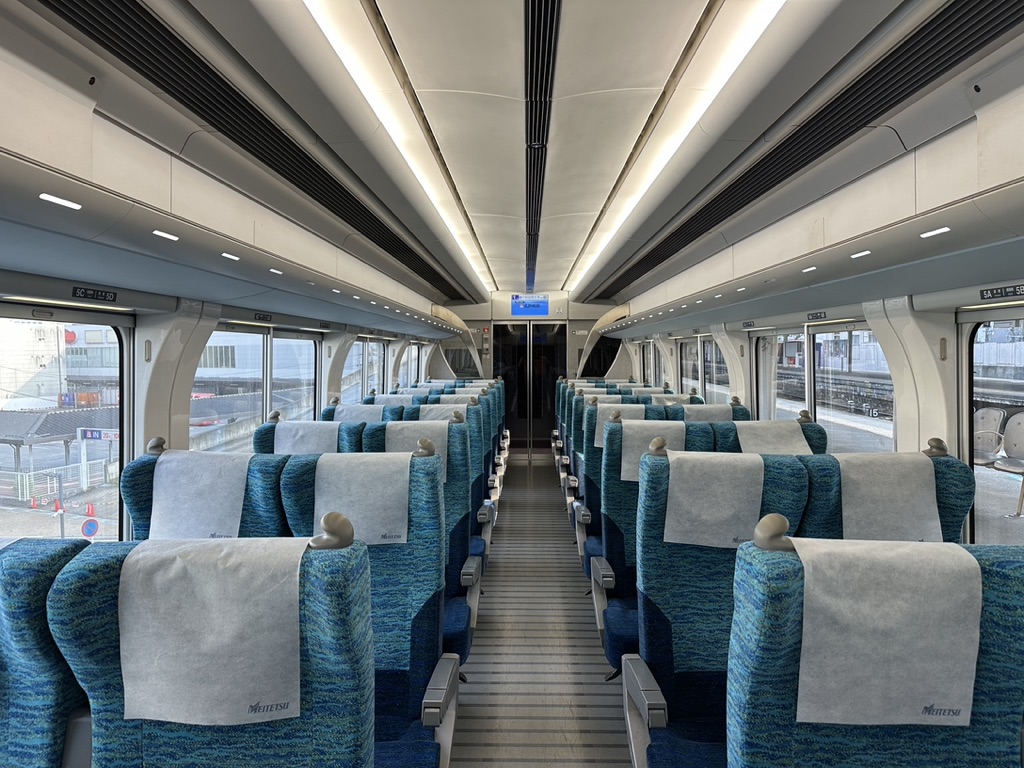
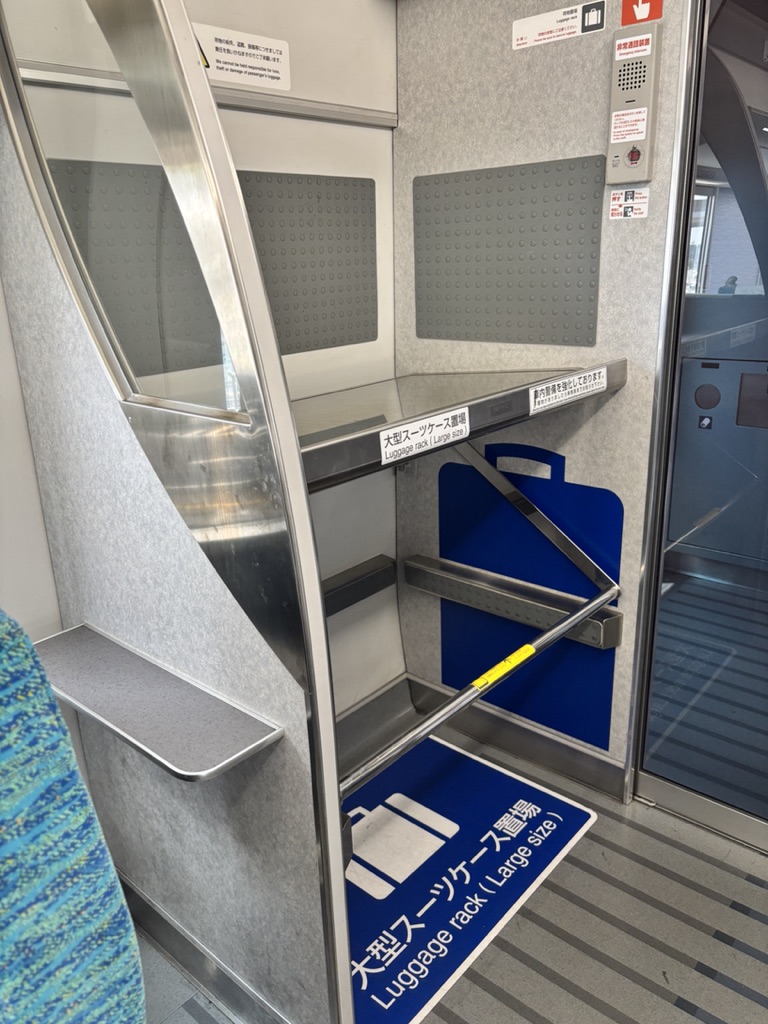
Whichever route you choose, you will need to transfer from the Meitetsu Railway to the JR network.
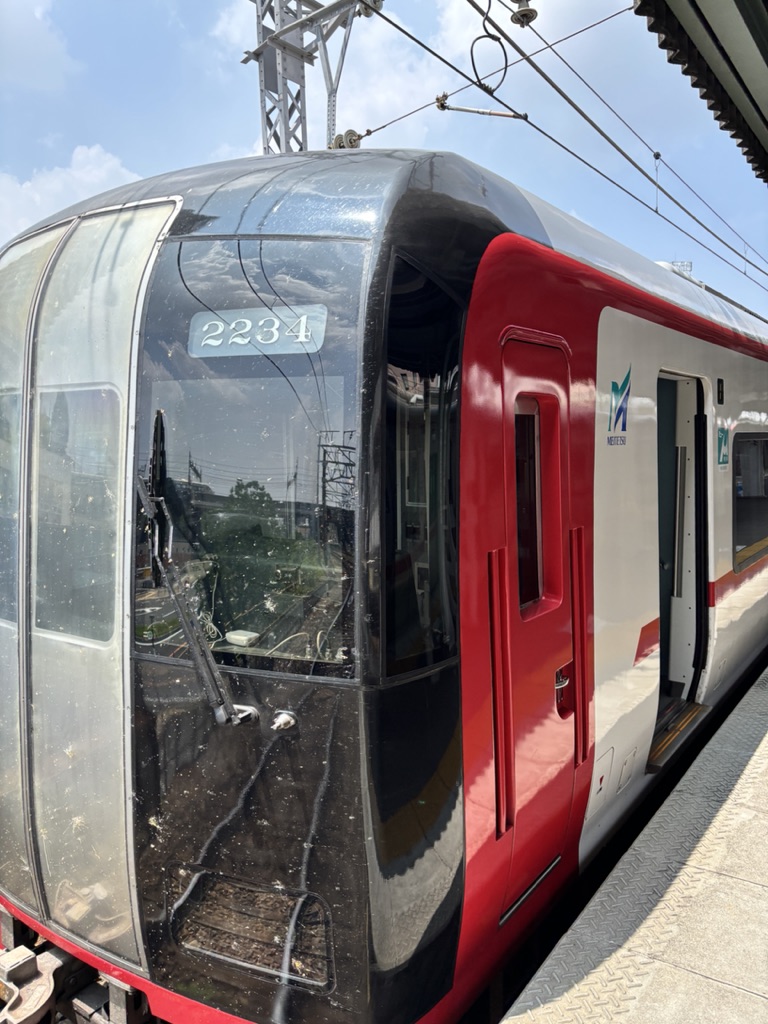
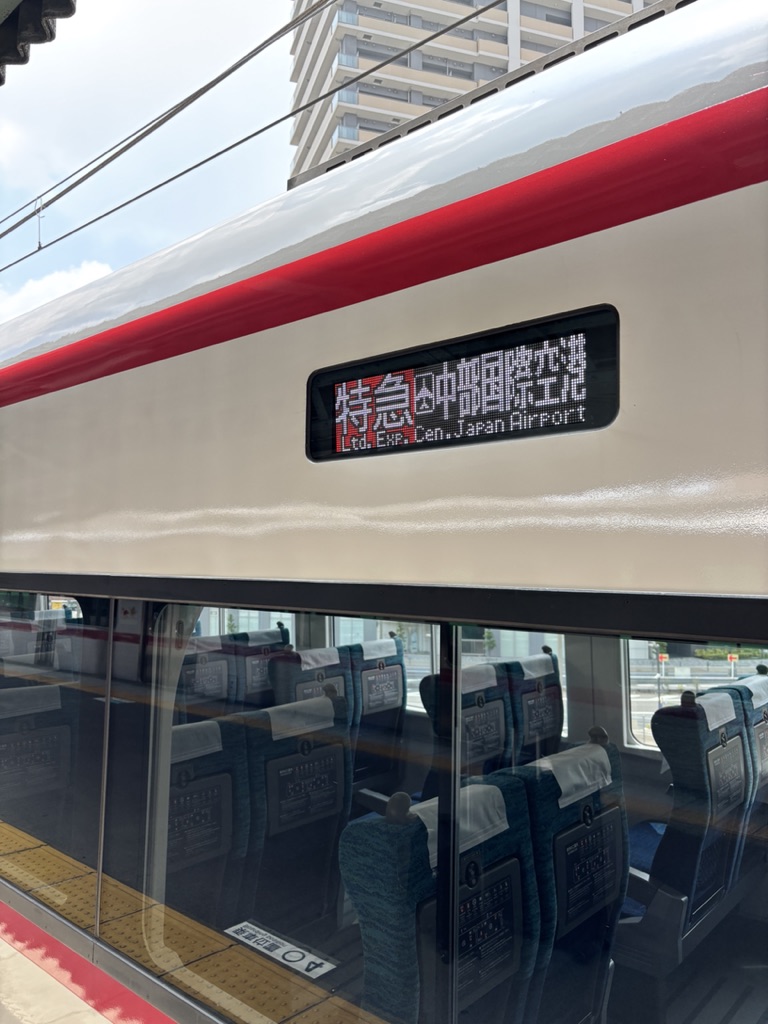
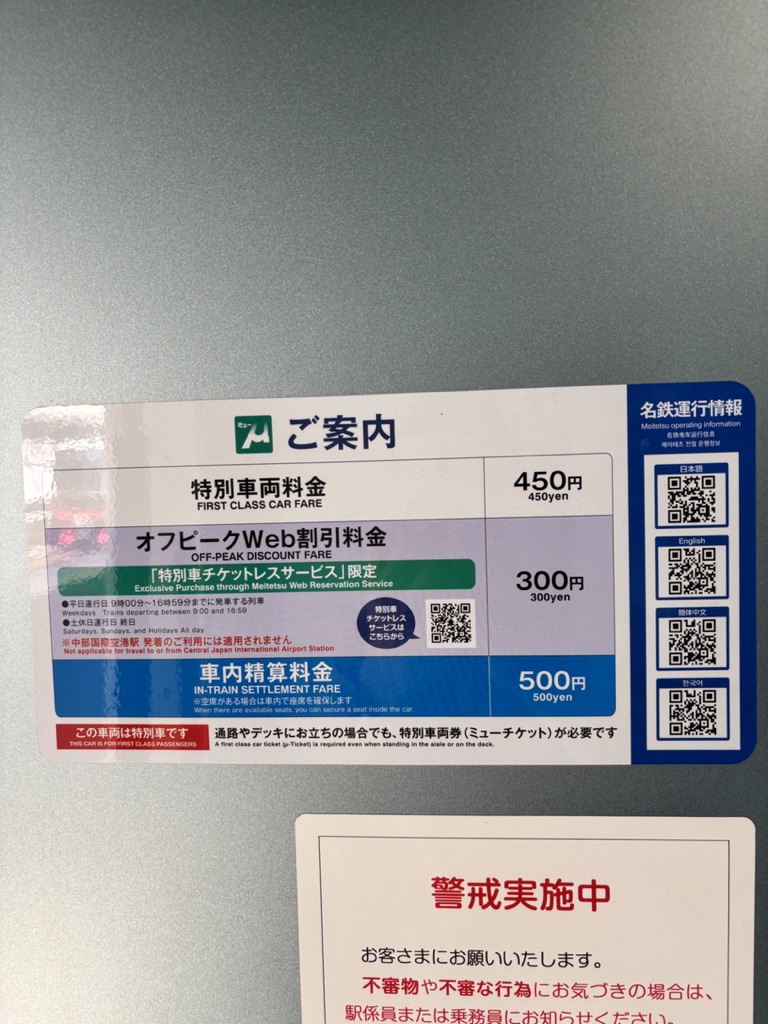
If you are planning to visit Gifu City before travelling on the Nagaragawa Railway, please refer to my previous travelogue, Travelogue: Nagaragawa Cormorant Fishing – A 1,300-Year-Old Tradition, which includes information on travelling via Gifu.
Booking the Nagara Sightseeing Train: Lunch Plan and View Plan
The Nagara sightseeing train does not operate every day, so it is advisable to book as soon as your travel dates are confirmed. Services generally run on Fridays, Saturdays, Sundays and public holidays.
The train consists of two carriages, each offering a different experience.
One is the Lunch Plan, where passengers enjoy a locally inspired meal during the journey. The other is the View Plan, which focuses on the scenery and does not include food.
An important difference is that only the View Plan continues all the way to Hokuno Station. The Lunch Plan terminates at Gujo-Hachiman Station, so passengers on that carriage do not travel beyond that point.
As I booked only shortly before my trip, the Lunch Plan was already full, so I travelled on the View Plan instead.
Passengers travelling on the Lunch Plan are not allowed to get off the train before reaching Gujo-Hachiman, as the meal service is provided throughout the journey.
| 美濃太田 Mino-ota | 関 Seki | 美濃市 Minoshi | 郡上八幡 Gujohachiman | 白山長滝 Hakusan-nagataki | 北濃 Hokuno | |
| View Plan | ||||||
| Arrival | 11:04 | 11:15 | 12:16 | 12:59 | 13:02 | |
| Departure | 10:45 | 11:06 | 11:16 | 12:22 | 12:59 | |
| Lunch Plan | ||||||
| Time | 10:45 | ー | ー | 12:16 | ー | ー |
Please check the railway company for the latest schedules.
Only major stations are listed.
If you would like to enjoy both the Lunch Plan and continue further north towards Hokuno, it is possible to transfer from the Lunch Plan carriage to the View Plan carriage at Gujo-Hachiman Station and continue your journey.
Reservations can be made online or by telephone. For the latest fares, operating dates and booking information, please refer to the official Nagaragawa Railway website.
Unfortunately, the official website and booking page are available only in Japanese. You may find it helpful to use your browser’s automatic translation function. If you still have difficulty making a reservation, please feel free to contact me at the email address in the profile page. I may be able to assist with the booking process where possible.
| *If the “Nagara” Sightseeing Train Is Not Operating or Fully Booked If the Nagara sightseeing train is not running on your travel date or reservations are already full, don’t worry—there are still several regular services to Hokuno Station. There are five trains a day running between Mino-Ota and Hokuno on both weekdays and weekends/public holidays. One particularly recommended service is the “Yura~ri Nagamete Seiryu Train”, which departs Mino-Ota Station at 9:56 am. This special service slows down at selected scenic sections along the route, allowing passengers to enjoy the spectacular views of the Nagara River at a more leisurely pace. For more information, please refer to the official website. Please note that most of the information is available in Japanese only. |
Enjoying the Spectacular Scenery of the Nagara River in Early Summer
When I arrived at Mino-Ota Station, the train was already waiting at the platform. I had booked my seat by phone in advance, so I simply bought my ticket from the ticket machine and paid the ¥510 reserved seat fee on board.


Although it is called the Nagaragawa Railway, the line does not begin running alongside the Nagara River until north of Mino. For the first part of the journey, the landscape is dominated by peaceful rice fields. I visited during the rice-planting season, when the paddies were filled with water, creating beautiful reflections across the countryside. Every time I return to Japan, I am reminded why it has long been known as the “Land of Abundant Rice.” I even spotted a white heron standing in one of the flooded fields.


As we passed Seki Station, railway staff came out to greet the train, creating a warm local atmosphere. The station also had a small selection of local souvenirs.


Shortly after passing Mino-shi Station, and after crossing paths with a brightly decorated train featuring Gujo Hachiman’s famous food samples, we finally began following the Nagara River northwards.


The interior of the train is just as attractive as the scenery outside. With its extensive use of wood, the carriage has a warm and welcoming atmosphere. It actually reminded me of travelling on trains in Norway during my university days, where timber interiors were also common.
The train consists of two carriages when departing from Mino-Ota. One is for passengers travelling on the View Plan, while the other is reserved for those on the Lunch Plan, who can enjoy a beautifully prepared bento meal while taking in the scenery through the large windows.


After a while, the train began to slow down. This thoughtful gesture allows passengers to fully appreciate some of the most beautiful stretches of the Nagara River. Everyone eagerly took photos, and it was easy to see how much they were enjoying the experience. The onboard guide also provided detailed commentary throughout the journey, and their passion for the local area was truly infectious.


One of the stops was Ōya Station, where old equipment and railway memorabilia from the former Japanese National Railways era are on display. It was a nostalgic visit and also served as a convenient comfort break.


At Gujo Hachiman Station, one carriage was detached. Passengers travelling on the Lunch Plan left the train here to enjoy their meal.


Although no food is served on the View Plan, drinks are available for purchase on board, including coffee and locally produced sake. As the journey continues, the scenery gradually changes from broad river views to mountains and rice fields, creating what many would consider the quintessential Japanese countryside. It is an incredibly relaxing journey.


Reaching Hokuno Station – Visiting the Turntable and Enjoying Lunch at the Station Restaurant
Around 45 minutes after leaving Gujo Hachiman, we arrived at the line’s terminus, Hokuno Station. Travelling through the fresh greenery of early summer was so enjoyable that I almost wished the journey would continue a little longer.


This was probably my first time seeing a railway turntable in person. It is registered as a National Tangible Cultural Property, and I couldn’t help wondering how it had ever been transported all the way here from Gifu.


The two-hour journey on the Nagaragawa Railway was an unforgettable experience. After arriving at Hokuno, the same train returns towards Mino-Ota, so it is perfectly possible to make a simple round trip if you prefer.


We, however, were continuing our journey to Itoshiro in Gujo City. Before setting off, we decided to have lunch at the small restaurant inside Hokuno Station. Hearing the staff greet us with a cheerful “Irasshaimase!” (Welcome!) brought back a wonderful sense of nostalgia—it felt like stepping into a traditional rural station from another era.
Final Thoughts – The Nagaragawa Railway Is an Essential Part of the Nagara River Journey
The Nagaragawa Railway is far more than simply a means of transportation. It offers a unique opportunity to experience the changing landscapes of the Nagara River, as well as the lives and traditions of the people who have lived alongside it for generations. On the Nagara sightseeing train, the train slows down at some of the river’s most scenic locations, while the onboard guide shares fascinating stories about the region, making it an excellent experience even for first-time visitors.
In the previous article of this series, I explored 1,300 years of cormorant fishing, a tradition shaped by the close relationship between people and the river. This time, I followed the river upstream, watching the scenery gradually change from broad valleys to quiet mountain landscapes. Travelling in this direction offers a different perspective on the communities whose lives have long been connected to the Nagara River.
In the next article, the journey continues beyond Hokuno Station to Itoshiro, a mountain village where the history of Hakusan worship has been preserved for centuries.
Travel Tip – Explore Ota-juku, a Historic Post Town on the Nakasendo
The starting point of the Nagaragawa Railway is Mino-Ota Station. The city itself is called Minokamo, so the station name can seem a little confusing at first. The name “Ota” comes from the former town of Ota, which inherited the history of Ota-juku, one of the post towns along the historic Nakasendo, the old highway that connected Kyoto and Edo (present-day Tokyo). Ota-juku was even depicted by Utagawa Hiroshige in his famous woodblock print series The Sixty-nine Stations of the Kisokaido.


Historically, Ota prospered through river transport on the Kiso River. This may seem a little confusing, as it is not actually on the Nagara River. However, the Mino region of Gifu Prefecture is shaped by several major rivers, including both the Nagara River and the Kiso River.


Ota-juku is about a 20-minute walk from Mino-Ota Station. Why not enjoy a stroll while taking in the peaceful scenery of the Kiso River before visiting the Ota-juku Nakasendo Kaikan, where you can learn more about the history of the post town? The area is also well known as the birthplace of the renowned Meiji- and Taisho-era writer Shoyo Tsubouchi.
Thank you for reading this far. If you liked this article, please give a ♡ at the bottom left.
Similar Posts

Gujo Hachiman: exploring Japan’s historic water town
After enjoying the traditional cormorant fishing on the Nagara River in Gifu City (Following the Nagara River – Part 1), I finally fulfilled a long-held wish to travel on the scenic Nagaragawa Railway (Part 2). From Hokunō Station, I continued to the mountain village of Itoshiro, where I spent the night and visited Hakusan Nakai Shrine. The following day, I also visited Nagataki Hakusan Shrine, continuing my journey through the sacred landscape of Hakusan worship before arriving at the final destination of this series (Part3): the historic castle town of Gujo Hachiman. Following the Nagara River Part 1 – 4 Journey to Gujo Hachiman on the Nagaragawa Railway ‘Nagara’ Before…

Itoshiro and the sacred shrines of Mount Hakusan
After arriving at Hokunō Station, the northern terminus of the Nagaragawa Railway, we continued by car to the mountain village of Itoshiro. Although Itoshiro lies outside the Nagara River basin, it prospered as the gateway to the Mino Zendō, the historic pilgrimage route to Mount Hakusan. From here, our journey shifted from following the river to exploring the spiritual heritage of Mount Hakusan. Our first stop was Hakusan Nakai Shrine, set among peaceful rural landscapes. The following day, we visited Nagataki Hakusan Shrine. Exploring these two historic shrines revealed how deeply the culture and history of this region are connected to Mount Hakusan, one of Japan’s three sacred mountains. Journey…

Review: DoubleTree by Hilton Kyoto Higashiyama – Rooms, Location & Diamond Member Benefits
This year, I was able to visit Kyoto during my visit to Japan. Kyoto is always crowded in November, but this year, even in early November, the temperature hadn’t dropped much, and the autumn leaves were a little late, so it didn’t seem as crowded as I had expected. Before going to Kyoto, I stopped off at Expo Commemoration Park. I was able to fulfill my wish to see inside the Tower of the Sun, which has been open to the public since 2018. From Expo Commemoration Park, I took the monorail and then the Hankyu line to Kyoto Kawaramachi Station, where I could easily get to my accommodation: the…

Review: Hilton Nagoya – Renovated Executive Lounge and Diamond Member Benefits
Originally published in November 2023, updated in May 2026 Our next stop after Kyoto was Nagoya. Thanks to Japan’s high-speed Shinkansen, the journey takes just 40 minutes. No sooner had I settled into my seat and started replying to a few emails than we were already arriving. As an aside, Japan is home to several cities with populations of well over a million, all connected by an incredibly efficient high-speed rail network. Trains depart at astonishingly frequent intervals. When I lived in Japan, I took this for granted. But now, having travelled from the UK, I find it genuinely remarkable. In this review, I’ll share my stay at Hilton Nagoya,…

Review: Conrad Tokyo (2022)
Many of Tokyo’s famous hotels are adjacent to Japanese gardens. Prince Hotel and New Otani are famous places for those in the know. The Hamarikyu Gardens is in front of the Conrad Tokyo, where I finally had the opportunity to stay. I have visited the garden several times before, but this was the first time I saw the garden from the hotel. Our guest room was stylish and sophisticated, and although the room was on a high floor, the atmosphere was surprisingly quiet and calm. When you go to the pool at the spa after the sun goes down, the skyscrapers of Shiodome can be seen shining in the darkness,…

Review: Hilton Tokyo Odaiba (2022)
It’s been three years since I last landed at Haneda Airport. By mid-November, London is already in the middle of winter, whereas Tokyo still has plenty of light. The immigration procedures, which were heightened due to the pandemic, were surprisingly easy. My regular hotel in Tokyo is the Hilton Tokyo Odaiba. While waiting for check-in, I was captivated by the wonderful view of the Rainbow Bridge directly in front of the lobby; I gradually felt that I was finally back in Tokyo! When I arrived at the room, I felt tired from the long trip, but after going out to the balcony and looking at Tokyo Bay at night and…